










After watching the Coen Brothers spend years mowing their way through genres and upending conventions, one question comes to mind: Is there anything these guys can't do. Common wisdom suggests "no" and, after winning Oscars early this year for No Country for Old Men, expectations have gone from modest to high. However, those anticipating another searing drama/thriller with Burn After Reading may be disappointed. The Coens, as is often their style, have elected to go in another direction. This is a thriller with a high quotient of comedic elements or, if you prefer, a comedy with a high quotient of thriller elements. As is always the case with a production of Joel & Ethan, it's difficult to classify, but that doesn't make it any less enjoyable.
The movie's plot involves so many threads and contains so many intertwined layers that it effectively defeats any summary with fewer than about 1000 words. So I'll set the stage and let the movie unveil its own secrets. To the thudding bass of resonant Carter Burwell score, the film opens by swooping down from above into Langley and introducing us to C.I.A. agent Osborne Cox (John Malkovich), who is about to quit in lieu of being demoted. This displeases his wife, Katie (Tilda Swinton), to no end. Meanwhile, her lover, ex-secret service agent Harry Pfarrer (George Clooney), is trying to decide whether to request a divorce from his wife to be with Katie. Harry also has a penchant for trolling the Internet for dates. That's how he meets a gym worker named Linda Litzke (France McDormand), who needs money for some cosmetic surgical procedures. With her accomplice, Chad (Brad Pitt), she figures out a way to get it: sell leaked C.I.A. secrets to the Russians – secrets that come from a copy of Osborne's unpublished memoirs.
The Coens, as is their way, keep piling it on, deepening the plot and tossing in some shocks that are all the more effective because of the matter-of-fact manner in which they are delivered. (Remember Josh Brolin's death in No Country? It's that sort of thing.) The screenplay never takes itself seriously, with comedic moments strewn about haphazardly. Some are merely amusing, some are clever, and some are downright hilarious. Perhaps the three funniest scenes are a pair of conversations between C.I.A. honchos played by David Rasche and J.K. Simmons, and a scene where George Clooney's paranoia has him bug-eyed and primed to flee.
By employing members of their extended acting family as well as talented "newcomers" to the Coen universe, Joel & Ethan ensure there's not a weak performance to be found. George Clooney, who does his best work for the Coens and Soderbergh, turns down the charm and enhances the sleeze in a role that certainly fits the clichéd "cast against type" description. Brad Pitt primps and poses as a personal trainer who likely would be less interested in Angelina Jolie than her brother. Frances McDormand gets to do a little screwball work alongside Clooney, Pitt, and Richard Jenkins. Tilda Swinton acts all ice bitchy, like she's still under the influence of her role in The Lion, the Witch and the Wardrobe. And John Malkovich does what John Malkovich does best - act weird before eventually losing it. All that's missing from Act III is the wood chipper, and one suspects Malkovich's character might have one somewhere on the premises.
The tone is a little like Fargo, although Burn After Reading isn't as nuanced. As comedies go, it's a definite notch below Raising Arizona, The Hudsucker Proxy, and even Intolerable Cruelty. So, in the Brothers' oeuvre, this would have to be considered a minor work, and it may look even more insignificant in the wake of No Country for Old Men. But if there's one rule that must be applied here, it's that lesser Coen works are often the equal to superior films by other directors. Burn After Reading likely won't be a major Oscar contender for 2009, but that doesn't mean it won't offer a hell of a good time in theaters toward the end of 2008.
 George Clooney, Tilda Swinton
 life learn to work together.

 eservist and her strict father during the Gulf War. Based on Alicia Erian's novel "Towelhead"
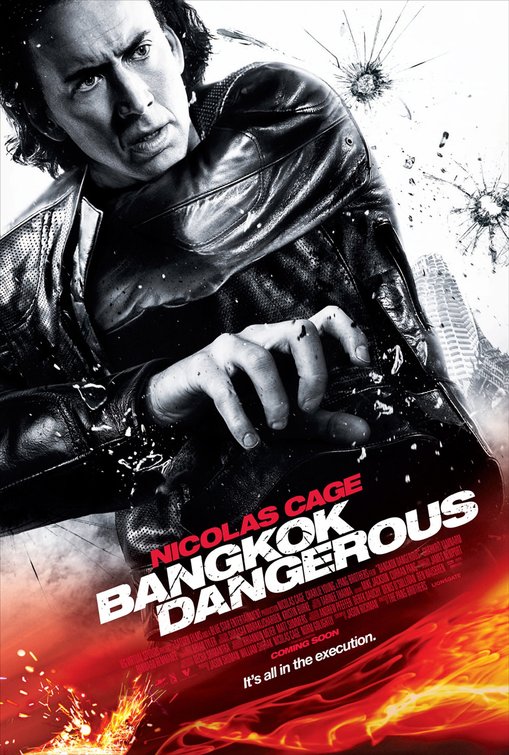
Perhaps unmoved by the Hollywood remake of their supernatural chiller The Eye (and who wasn’t?), the Hong Kong-born, Thailand-based Pang twins take personal responsibility for the English-language reload of the action thriller that made their name.
Unfortunately, they’ve omitted two key elements: action and thrills.
With a barnet to make a Spanish footballer wince and all the enthusiasm of a businessman with a Thai food allergy, Nicolas Cage mooches around the streets of Bangkok as Joe, a hitman who lives by his own strict set of rules.
These he drones on about in one of those voiceovers that nobody pays any attention to. Not even himself apparently, because he promptly breaks the lot.
After landing a four-hit contract with a shady kingpin, Joe hires unsuspecting street hustler Kong (Shahkrit Yamnarm) to act as his errand boy with the intention of killing the poor sap as soon as the job’s done.
But after plugging one mark in his limo and drowning another in his pool, Joe has a change of heart and spuriously agrees to make Kong his apprentice.
Cue a training montage involving press-ups and shooting at watermelons which is as uninspired as it is pointless because, come the final showdown, Kong is as much use as a chocolate wok.
The credibility of Joe’s credo dwindles further when he falls for the first deaf-mute pharmacist he comes across (Charlie Young)… even more so when he covers her in the blood of a couple of hapless muggers.
Kong has better luck with the slinky nightclub dancer who works for Mr Big, but with one hit to go, everyone loses that loving feeling.
Not only is the last mark a much-loved politician, sending Joe into a moral tailspin, but it seems that Mr Big is also a believer in leaving no loose ends.
The 18 certificate – presumably sought and earned for two gory bits - suggests action with a violent edge. But, plotted like one of The Equaliser’s duller episodes and shot in grainy, pallid green hues, this is a depressing experience.
Ludicrous? Occasionally. Ponderous? Frequently. But dangerous? Only for the careers of Cage and his stylist.
Elliott Noble
 Italian
Read other reviews about this film

|
Adapted from French writer Maurice G. Dantec's 700-plus-page "Babylon Babies," pic strips the book of its weightier material -- which includes an analysis of post-Soviet conflict strategy and a philosophical take on cybernetic bio-engineering -- and leaves only the threadbare plot.
After a (literally) eye-catching sequence that shows early signs of the CGI action to come, pic flashes back a week earlier to war-rattled "New Serbia," where gun-for-hire Toorop (Diesel) sits out the fighting in a boarded-up apartment. Dressed like a frat boy heading for an early morning class and showing just as much conviction, he barely reacts when a SWAT team busts in to bring him to Gorsky (Gerard Depardieu, sporting an unnecessary prosthetic nose), a Russian mafioso offering a sizeable payoff if Toorop delivers a special package to New York.
The package in question is a mysterious blonde nymph, Aurora (Melanie Thierry), who's been hidden away in a convent under the protection of Sister Rebecca (Michelle Yeoh). Instead of inquiring why Aurora is worth the hefty price of border smuggling, Toorop shrugs off any serious questioning, unsuccessfully tries to light a cigarette (a gag repeated throughout), and the three set off.
First destination is a train station in Kazakhstan, which occasions one of the pic's more convincing set pieces when a bomb detonates. A second stop at a Vladivostok nightclub (whose featured entertainment is Ultimate Fighting Championship-style death matches) introduces Toorop's war buddy Finn (Mark Strong) to the team, and the four barely escape a run-in with some jumpy henchman.
Lengthy middle action sequence has them crossing the Bering Strait on snowmobiles (actually shot in Sweden), and here Kassovitz revisits the kinds of snow-filled scenes that marked his French suspenser "The Crimson Rivers." Yet as with most of this pic's fighting and effects, the reliance on extreme closeups, frenzied handheld camerawork and rapid editing leaves little room to enjoy the breathtaking views, let alone fully grasp Toorop's heroic abilities.
When they finally reach New York -- which, in this futuristic version, has a few more skyscrapers and a lot more electronic billboards -- they prepare to hand Aurora over to the pale Neolite Priestess (Charlotte Rampling, convincing but short-lived), who heads up the powerful sect/corporation that commanded the transaction. But, as previewed by the pic's initial flash-forward, the exchange does not go according to plan.
Comparisons to "The Fifth Element" -- another French-produced and -helmed blockbuster featuring a bankable Hollywood actor -- are likely, and both films suffer from the same lightweight characterization and misfired attempts to render a future society both credible and meaningful.
Whereas Kassovitz's earlier features, from his breakout "La Haine" to his last U.S. effort, "Gothika," revealed a strong sense of style and directorial wit, such qualities seem absent from "Babylon A.D.," which takes itself far too seriously yet fails to deliver its muddled message.
Fans of "Pitch Black" hoping Diesel would reprise the stone-faced Richard Riddick role here will be disappointed, and he seems to be half-smirking through much of the film's risible dialogue (co-written by Gallic scriber Eric Besnard). Yeoh and promising young thesp Thierry manage to extract a few bits of emotion, mostly when they're not talking.
While the novel is set in 2013, the film does not specify its time period, although the production design by Sonja Klaus and Paul Cross feels "near-future." Darkish lensing by longtime Luc Besson collaborator Thierry Arbogast befits the film's somber tone, but doesn't make the action, which includes stunts by parkour founder David Belle, easy to follow. For all its continent-hopping, pic was largely shot at Prague's Barrandov Studio.
Print viewed in Paris ran 100 minutes, while U.S. version purportedly runs 90 minutes.
Camera (color, Panavision widescreen), Thierry Arbogast; editor, Benjamin Weill; music, Atli Orvarsson; production designers, Sonja Klaus, Paul Cross; supervising art director, John King; set decorators, Francesca Cross, Michel Pages; costume designers, Chattoune, Fab; sound (Dolby Digital/DTS Digital), John Rodda; sound designer, Nicolas Becker; supervising sound editor, Ken Yasumoto; re-recording mixers, Yasumoto, Francois-Joseph Hors; visual effects supervisor, Stephane Ceretti; visual effects, Buf Compagnie; stunt coordinator, Bob Brown; fight choreographer, Alain Figlarz; associate producer, Benoit Jaubert; assistant directors, Charlie Watson, Kieron Phipps; casting, Jina Jay. Reviewed at UGC Cine Cite Les Halles 6, Paris, Aug 20, 2008. MPAA Rating: PG-13. Running time: 100 MIN.
With: Joel Kirby, Souleymane Dicko, David Belle, Radek Bruna, Jan Unger, Abraham Belaga, Gary Cowan, David Gasman, Lemmy Constantine.
(English dialogue)
Variety is striving to present the most thorough review database. To report inaccuracies in review credits, please click here. We do not currently list below-the-line credits, although we hope to include them in the future. Please note we may not respond to every suggestion. Your assistance is appreciated.

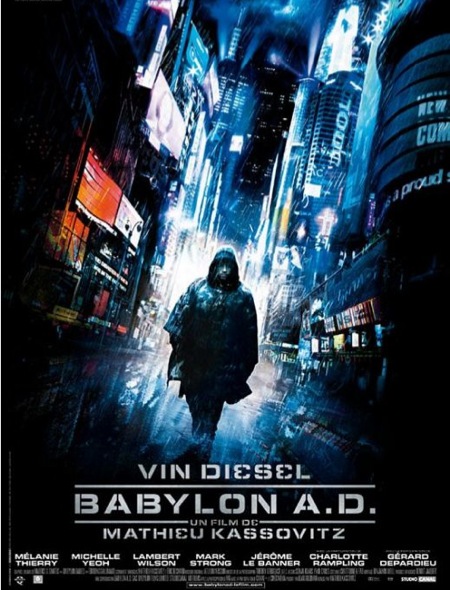 Veteran-turned-mercenary Thoorop takes the high-risk job of escorting a woman from Russia to America. Little does he know that she is host to an organism that a cult wants to harvest in order to produce a genetically modified Messiah.
 actor-turned-worse-high-school-drama-teacher rallies his Tucson, AZ students as he conceives and stages politically incorrect musical sequel to Shakespeare's Hamlet.


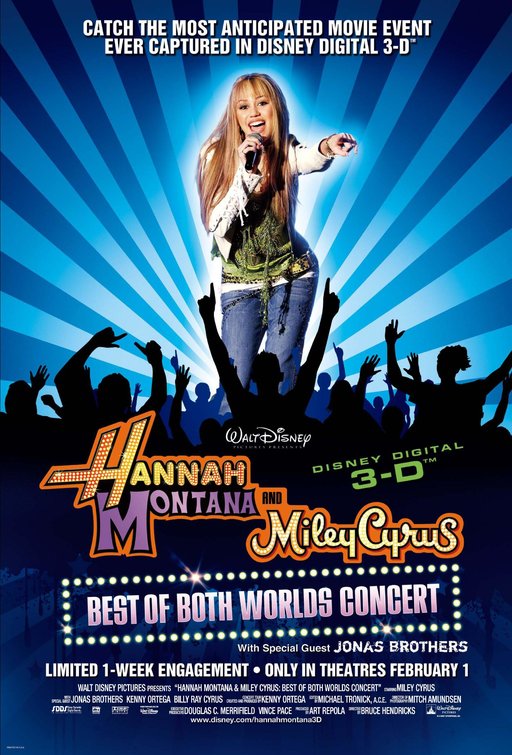 of the 2007 Hannah Montana/Miley Cyrus tour.

Ladies and gentlemen, the race is over. The competition is won. The arrival of Paul W.S. Anderson’s Death Race - even though it comes so very early in the year - has put a conclusive end to the race for the 2008 Razzie Awards. Worst film? Worst director? Worst screenplay? Worst actress? Not only will Death Race take all of these categories but the competition won’t even be close. There is quite simply no chance whatsoever that any other film will arrive on the scene to rival this - the latest in a long, ling line of very, very bad films from Anderson - for if anyone should even attempt to create another film at this level of ineptitude within the rest of the calendar year I have no doubt that the universe would spontaneously implode in protest of having to play host to such an indignity. This, people, is a Very Bad Film.
On the surface, a remake of the Roger Corman-produced cult flick would seem apropos, even timely right now. Death Race is a title primed to both exploit and comment upon the current craze for ‘extreme’ - read, ‘hyper violent’ - sport and the society that consumes it but there is neither the will nor the brain at work here to offer any sort of commentary whatsoever, nor the skill to properly exploit it. What do we have? Jason Statham is Jensen Aimes, a near future steel worker and former race car driver thrown out of work when the mill he works at shuts down, leaving him unable to provide for his wife and infant daughter. It’s not like he has long to worry about that, though, because the very same day Aimes is thrown out of work masked men invade his home, kill his wife, and leave Aimes unconscious with a bloody knife in his hand. Six months later he has a life term in prison.
But prisons are different in the future. They have become privately run, for-profit organizations. Rehabilitation? What’s that? The prisoners are fodder for extreme sports, corpses-in-waiting destined to battle it out for massive pay-per-view online audiences with potential release dangled in front of their eyes as a prize should they succeed multiple times in the gladiatorial combats. And the most successful of these games, the highest rated sport, is the Death Race - a three day, multi stage race run by prisoners in cars heavily modified to include steel armor and heavy weaponry. Hmm ... new guy in prison happnes to be a driver, and the next Death Race is just days away, there couldn’t be a conspiracy at play here, could there? Of course there is! The prison warden orchestrated the killing of Aimes’ wife and his subsequent conviction, needing him to replace Frankenstein, a popular masked driver killed (though nobody knows that) in the last race. Bloodshed ensues.
For a brief, shining moment I actually though Death Race may end up being a servicable B-flick on the strength of it’s cast - arguably the best Anderson has ever had to work with. Sure, Statham aint a great actor, and he never has been, but he’s a charismatic guy, easily able to chew his way through this stuff. Throw the dependable Joan Allen and brilliant Deadwood baddie Ian McShane into the key support roles and this could actually work, right? Oh, hell no. The film fails on so many levels it’s hard to keep count.
The blame, first of all, should rest at the feet of Paul W.S. Anderson. His direction is horrible, with the exception of a couple of admittedly stellar shots the car race scenes are actually kind of cluttered and boring, several normally solid bit players turn in career worst performances and the Anderson-written script is laughably, horribly bad. We like to joke about plot holes big enough to drive a truck through but this film has plot holes that people LITERALLY drive actual trucks through with nobody so much as batting an eyelash. And the dialog ... oh, the dialog ... but more on that later ... Anderson wears a LOT of hats on this film and, without belaboring the point, it is very safe to say that the work he turns in for every single role he is supposed to fill is appallingly below standard.
The blame, second of all, should rest at the feet of the cast. Not Statham so much - he’ll brush this one off easily enough - or McShane, who is absolutely the only performer to rise above the level of the script he’s given to turn in something approaching a compelling performance, but all the rest are horrible. Tyrese Gibson hits an all time low as the primary on-track villain. Natalie Martinez as Statham’s navigator / love interest? Utterly abysmal every time she opens her mouth, but honestly she was cast for her cleavage not her ability to deliver a line and the cleavage is just fine, thanks, so it’s hard to fault her too much. But Joan Allen? Oh, Joan, what were you thinking? Did you not read the script when they sent it to you? When we get to hear Morgan Freeman cuss in Wanted it ends up being a high point of the film because Freeman so clearly is having a blast playing so far against type, he delivers the line so incredibly well, and it fits within the world Wanted has created. But when Allen cautions Statham, “Fuck with me and we’ll find out who shits on the sidewalk.” the response is just, WHAT? What the hell? What does that even MEAN? Never mind that the delivery’s clumsy, that’s just NONSENSE! And nonsense is never, ever bad-ass. Oh, Joan, I know I can’t blame you for writing it, but you agreed to say it and you really, really should have known better.
So, the film’s horrible. That leaves the question of whether this is a so-bad-its-good sort of film. Well, once the first openly mocking laugh burst out about half way through the screening I attended the crowd loosened up noticeably and got into the jeering spirit. Did we have a good time? Yes, yes we did. But, importantly, none of us had paid to be there. And, honestly, I can’t imagine any paying, sober audience being happy about having to sit through this.

 (Animated)

 Posts
All Comments
Posts
All Comments


